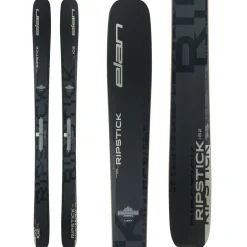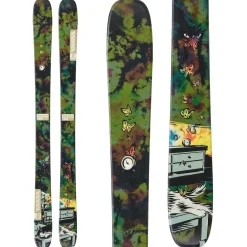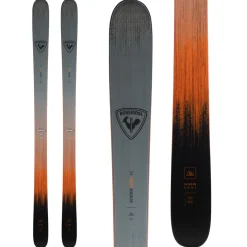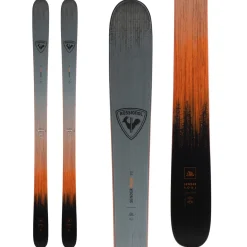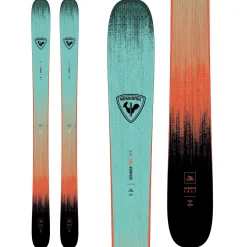
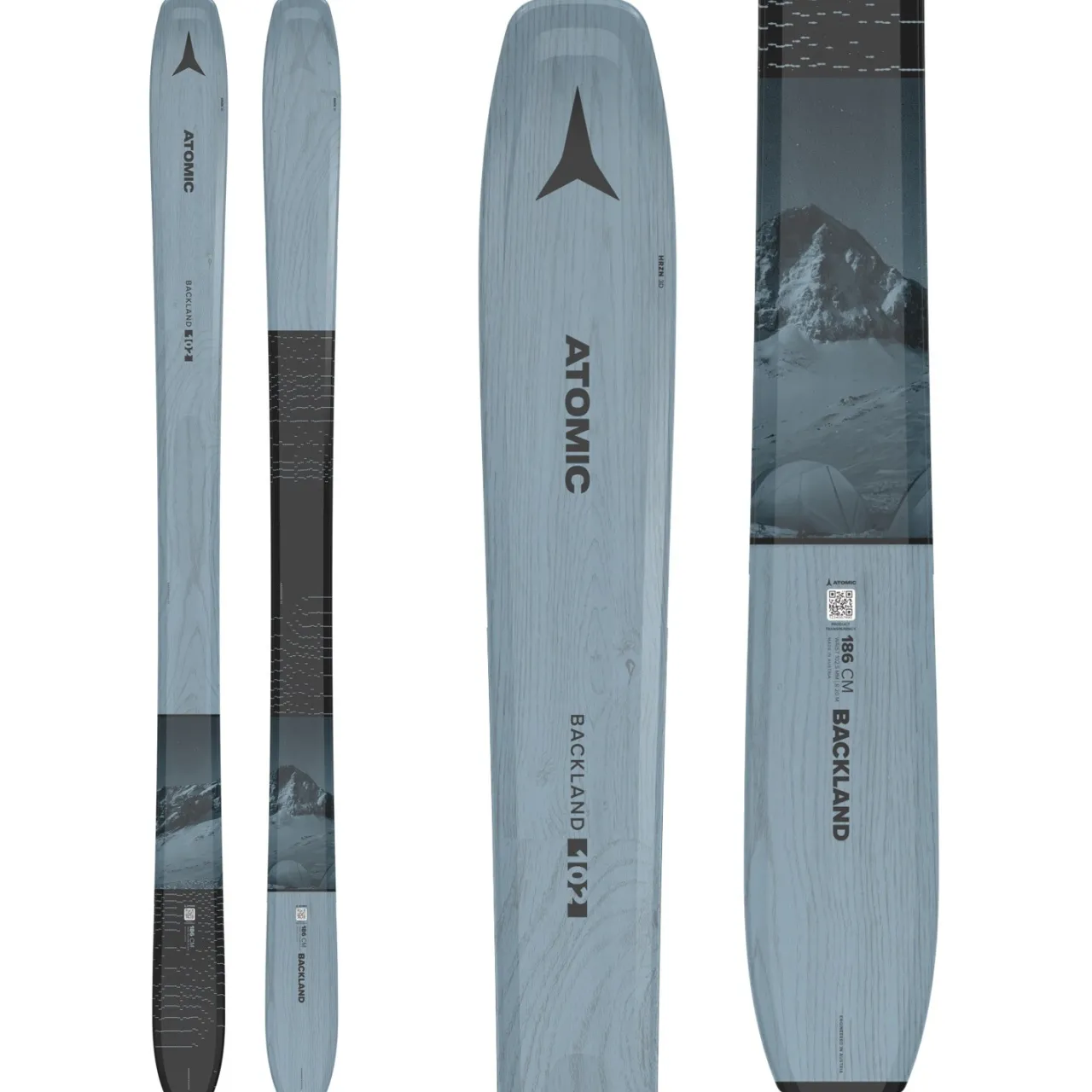
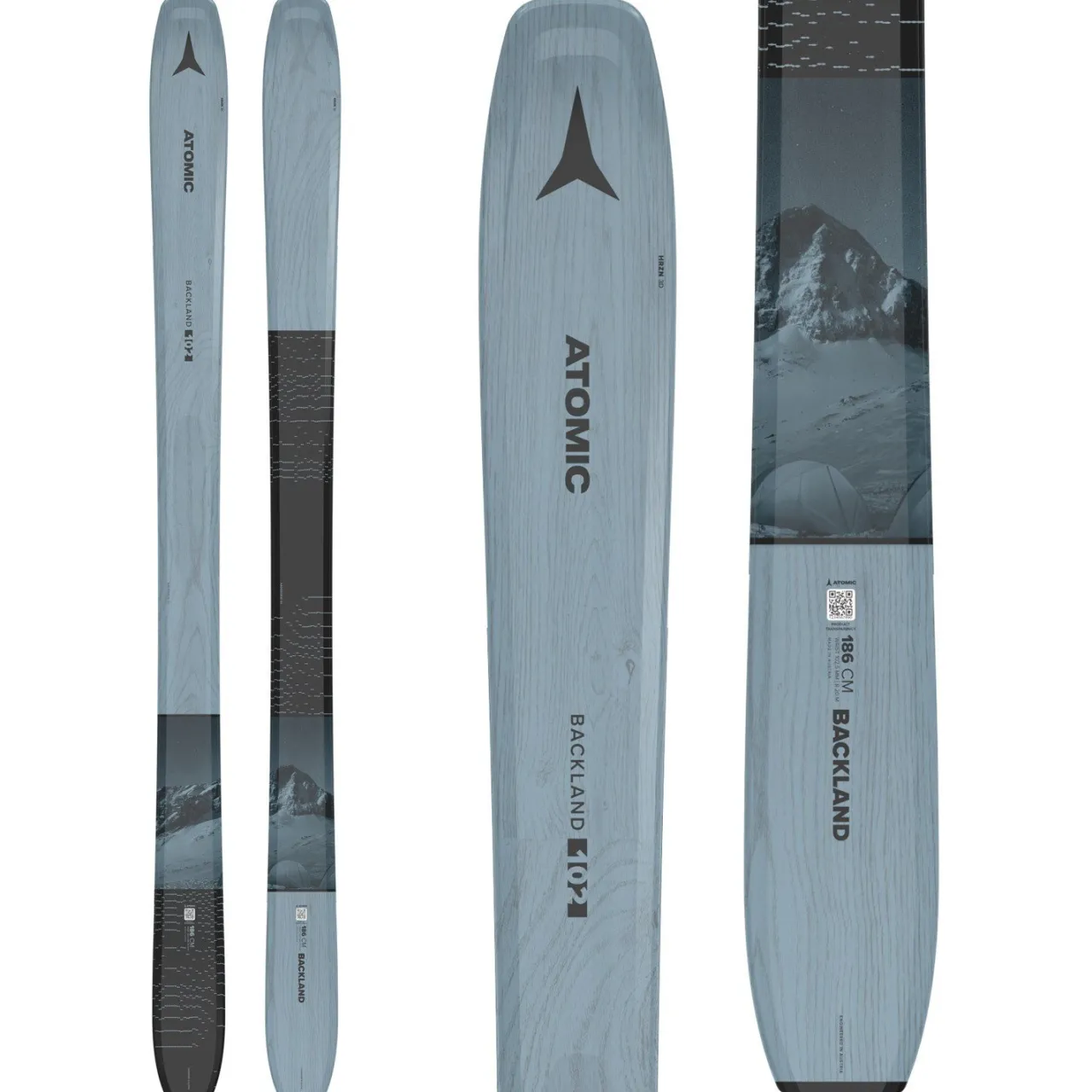
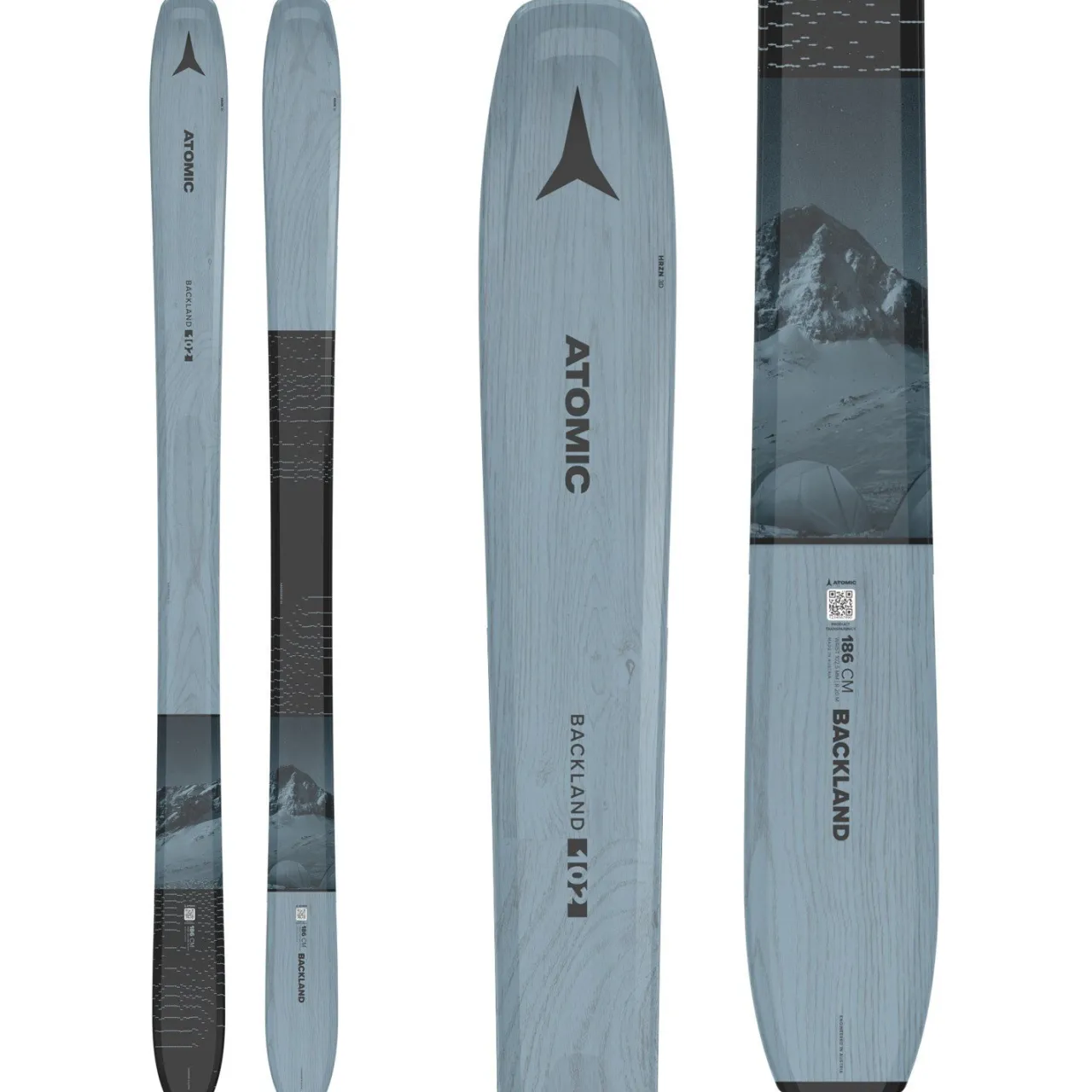
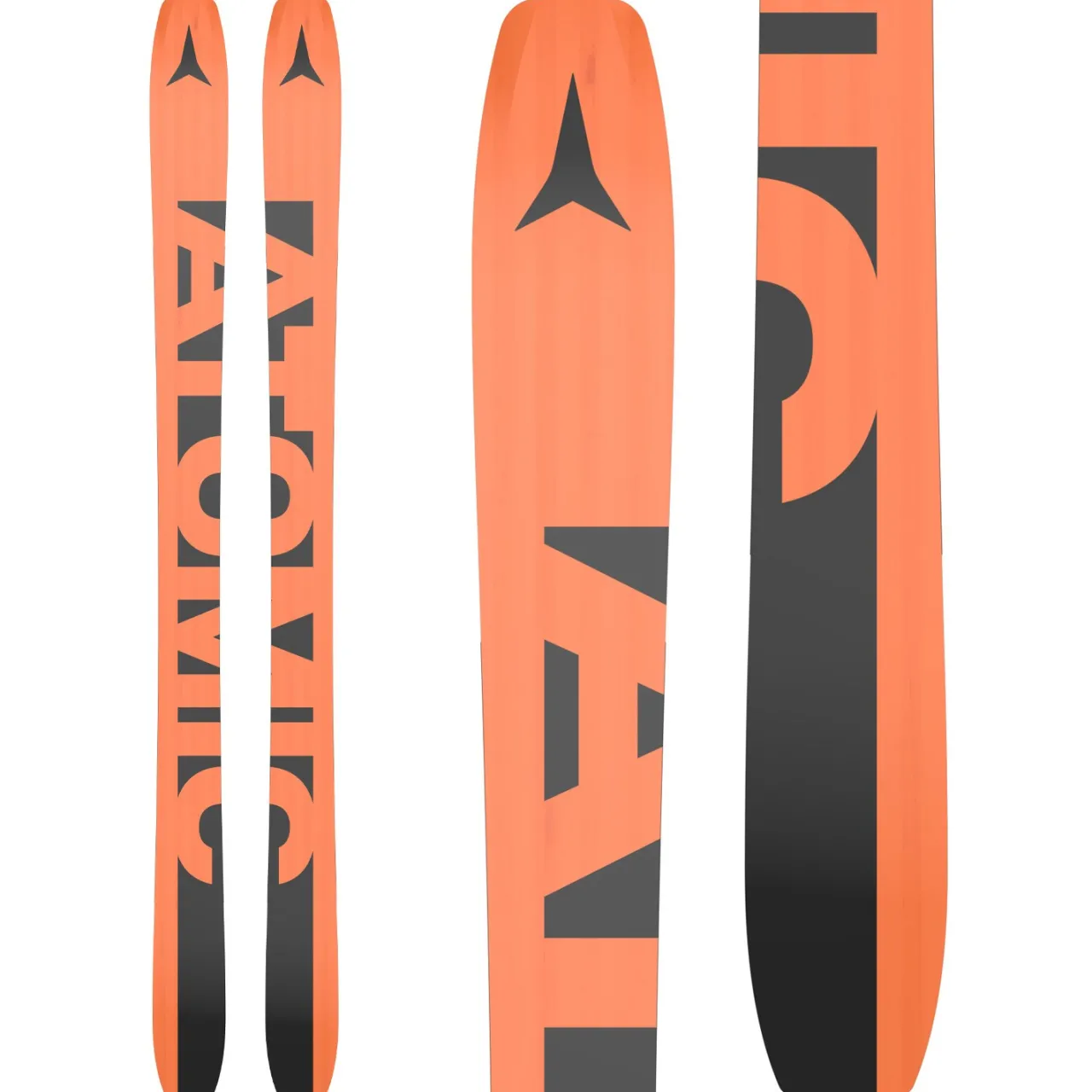
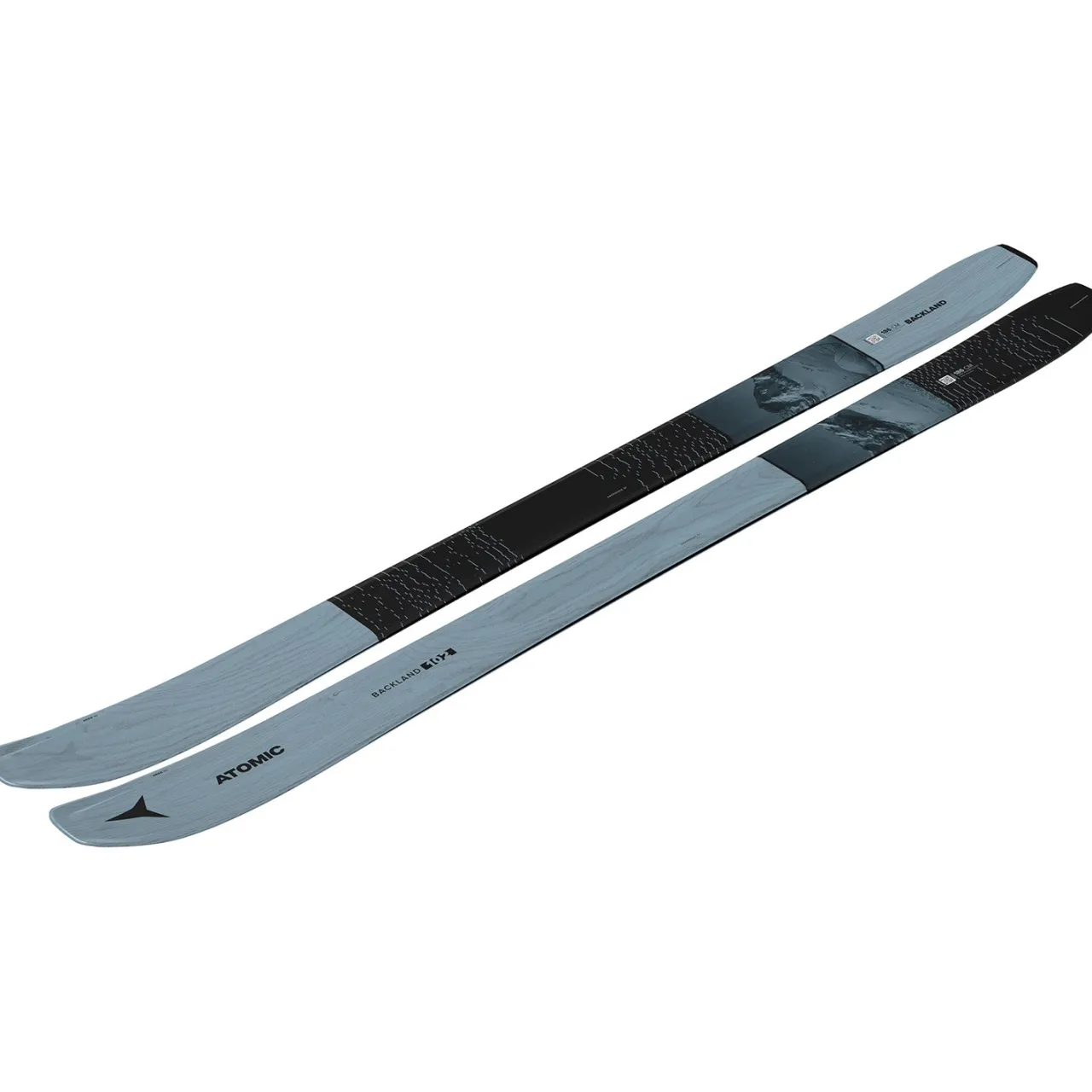
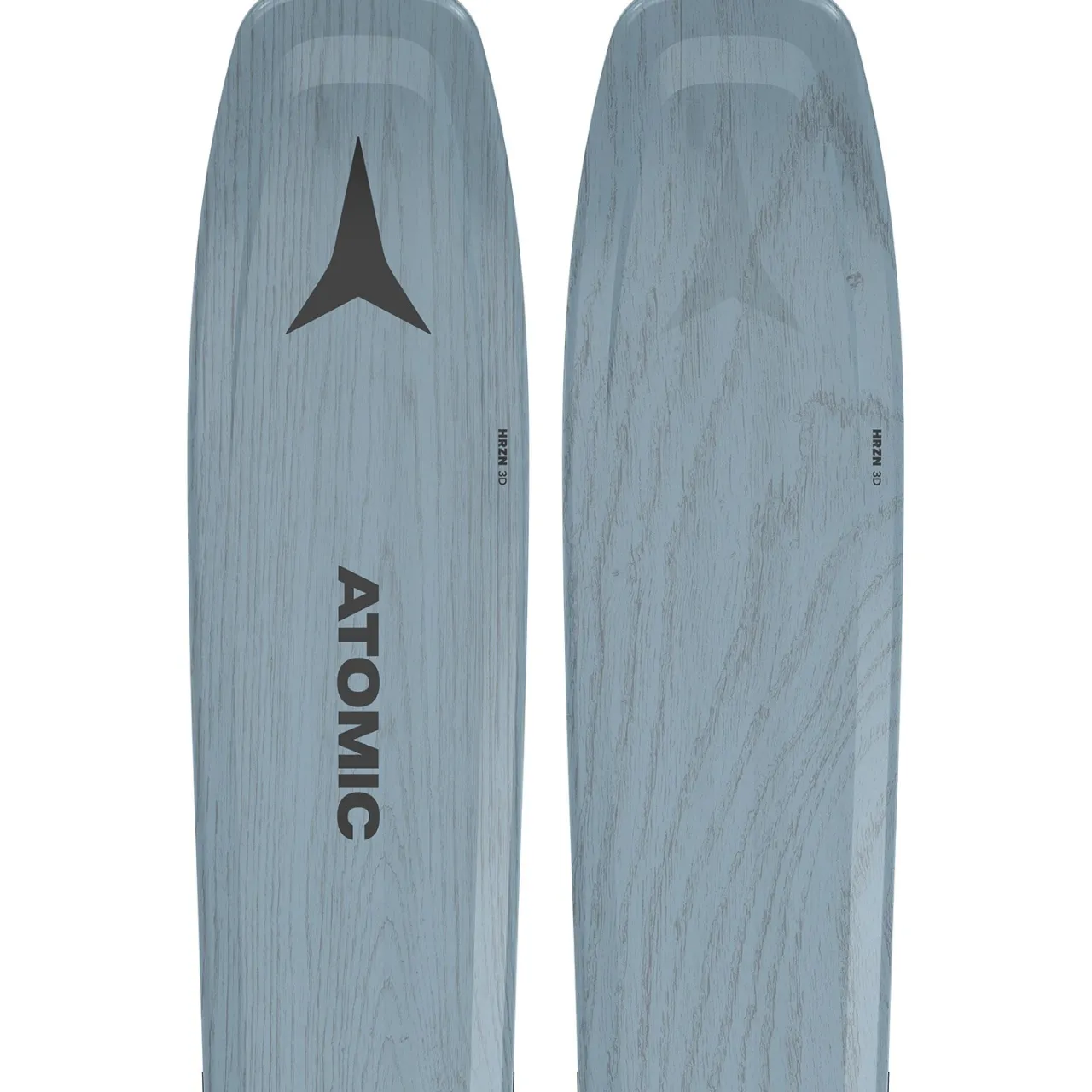
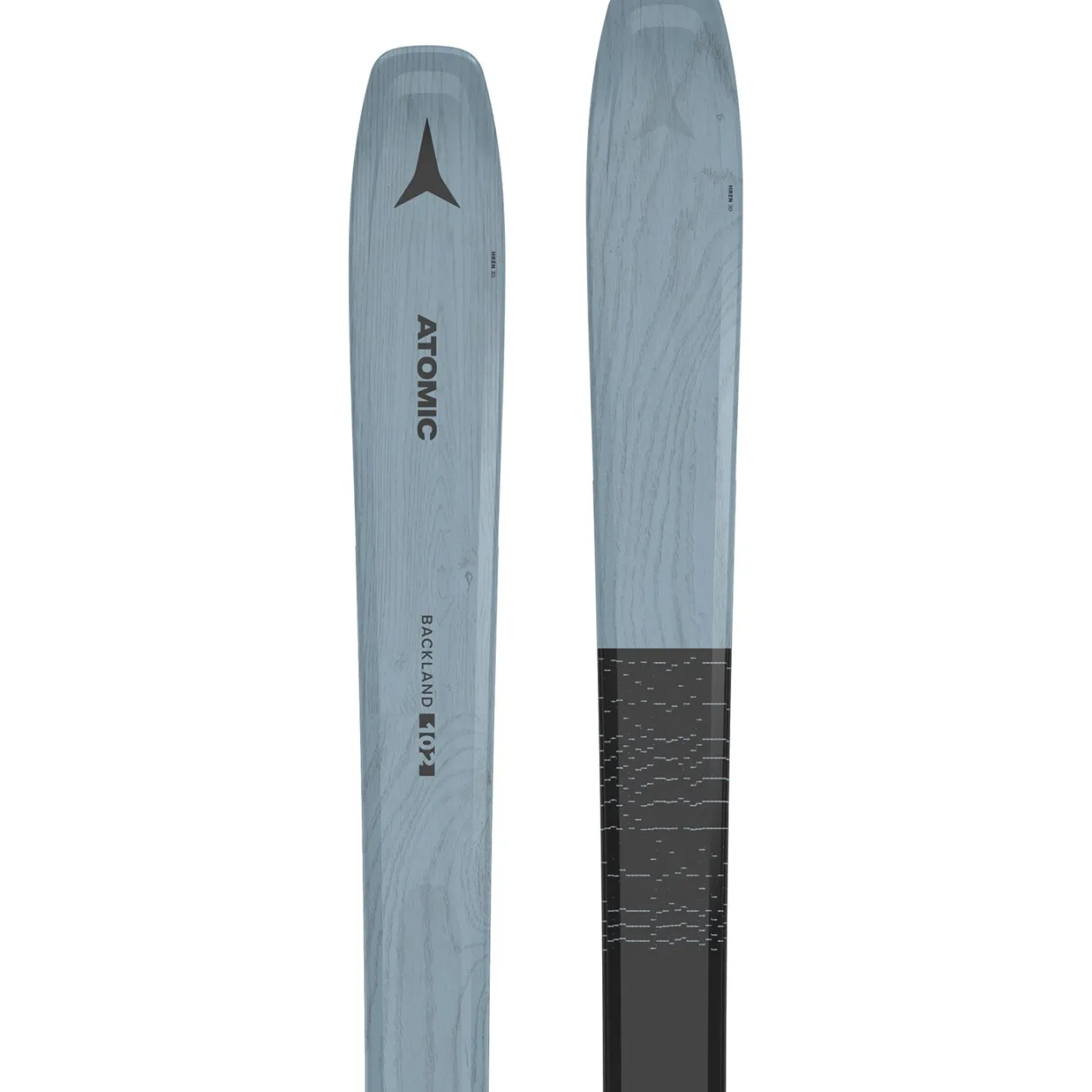
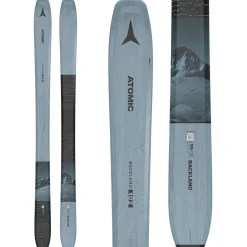
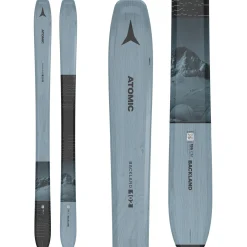
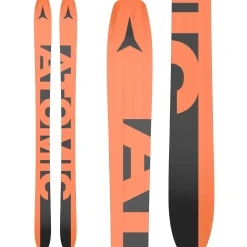
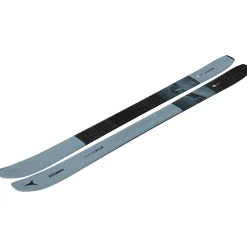
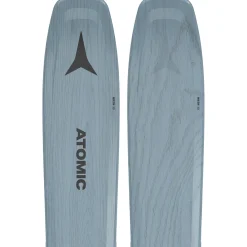
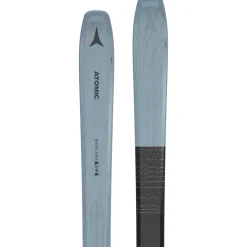
An all-new construction gives the Atomic Backland 102 Skis a much smaller environmental impact with arguably even better backcountry performance than the proven Backland 100. Weighing in at only 1430 grams per ski in a 179, the Backland 102 straddles the fine line between “light” and “capable” with grace and ease – if you only have room for one touring ski in the quiver, make it this one.
              Â
Rocker Type
      Â
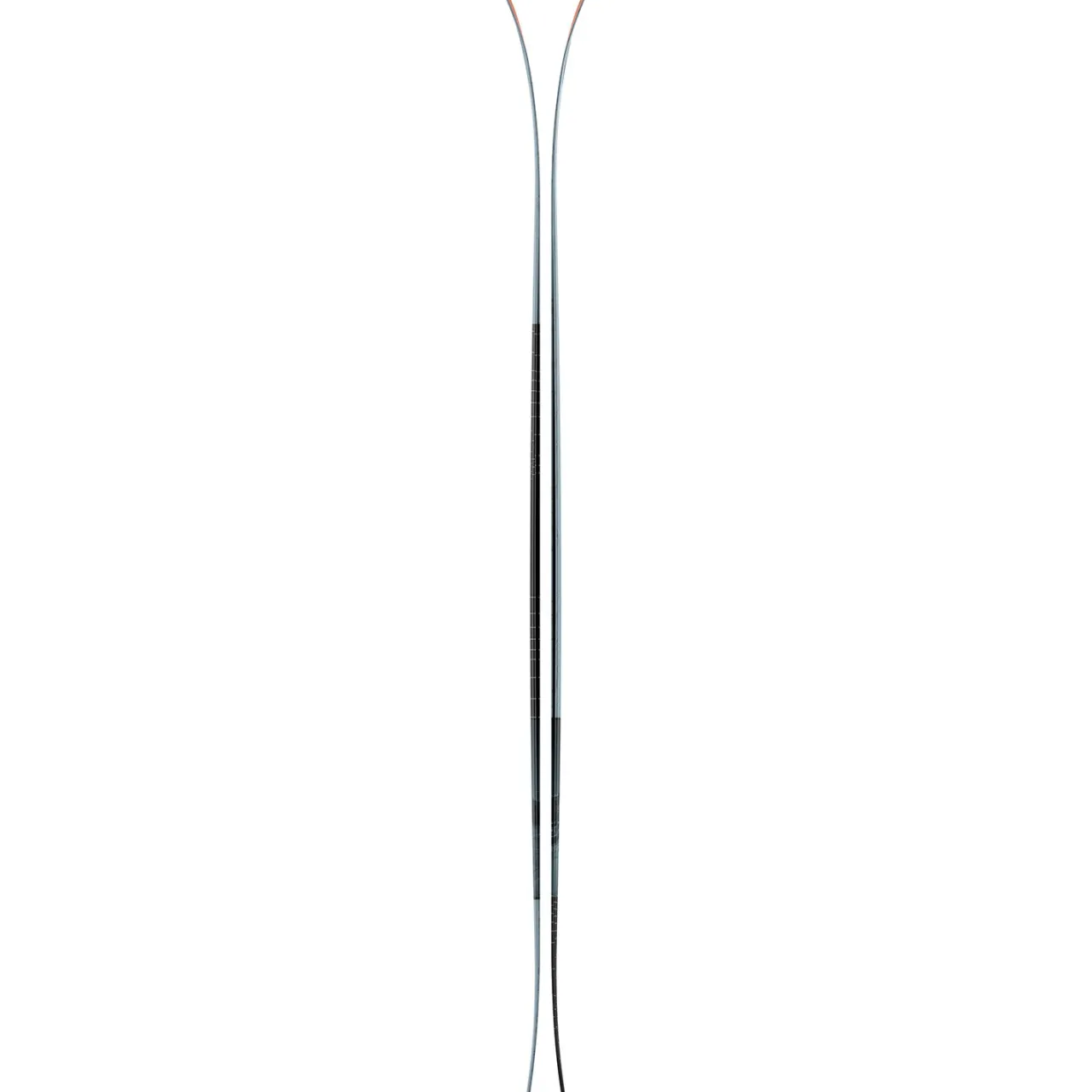
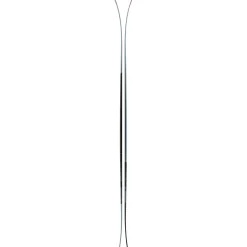
   Powder Rocker–        20% Tip Rocker / 65% Camber / 15% Tail Rocker
      Â
Shape
      Â
   HRZN 3D Backland Tip–        Backland’s lightweight HRZN 3D uses a thin, perforated material to create a ski with low swing weight.
      Â
Core
      Â
   Ultra Light Woodcore–        Light Poplar and Caruba woods
      Â
Laminates
      Â
   Reduced Fiberglass and Resin–        Life Cycle Assessment analysis showed Fiberglass and Resin contributed disproportionately to the skis carbon footprint; more wood and less fiberglass, resin and metal reduces carbon dioxide equivalent emissions by 26%
      Â
      Â
   Hardwood Binding Reinforcement
      Â
      Â
   Topsheet with More Recycled Material
      Â
Sidewalls
      Â
   Dura Cap Sidewall–        Vertical underfoot with cap at the tips and tails
      Â
Base
      Â
   Atomic Base–        High-density sintered bases that are fast in a variety of snow conditions and accept wax readily.
      Â
Edges
      Â
   Side Edge Angle–        87°
      Â
      Â
   Base Edge Angle–        1.3˚
      Â
Binding Compatibility
      Â
   We recommend a brake width equal to or at most 15 mm wider than the ski waist width.
      Â
              Â
          Â
      Â
- Â Â Â Â Â Â Â Â Â Â Â Â Â Â Â Â Â Â Â Â Â Â Â Â Â Â Â Â Â Â Â
-    Terrain:    Alpine Touring                                    Alpine TouringAlso known as backcountry skis, alpine touring (AT) skis are designed for going uphill as well as downhill. These skis are typically light for their width and many feature fittings that accept climbing skins. AT skis vary in width and weight, with the wider heavier versions usually used for winter/deep snow touring and the skinnier, lighter skis usually used for spring/summer/long distance touring.           Â
      Â
      Â
      Â


Reviews
There are no reviews yet.